Module 22: Pedal Tones
The Foundation of Range
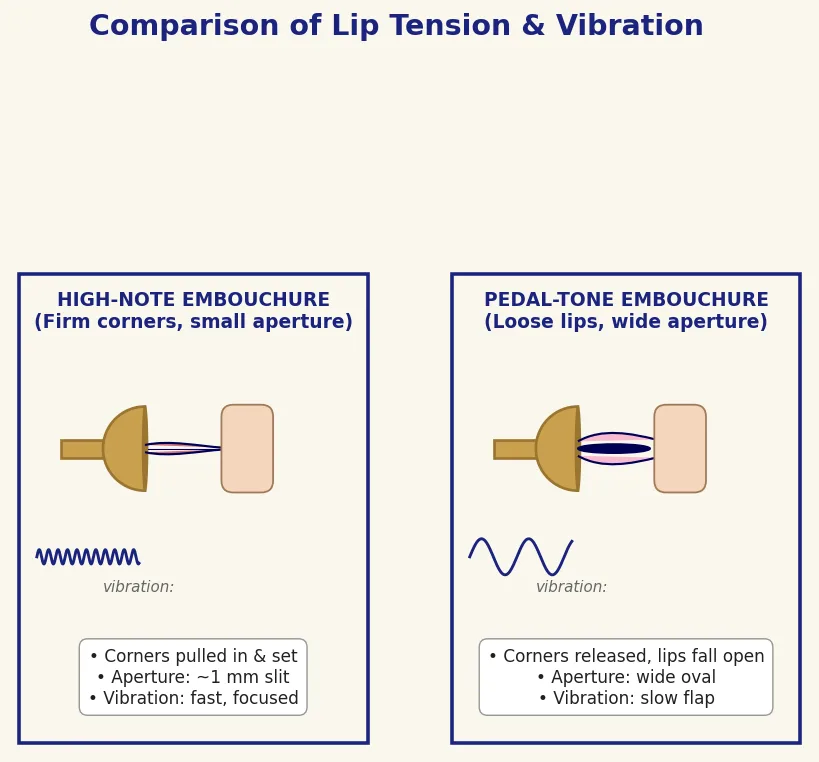
It sounds counter-intuitive, but to play high, you must play low. Pedal tones (notes below the normal register) force you to relax the center of the lip.
Why it works: High notes require tension. Pedal tones require relaxation. Alternating between them keeps the aperture flexible and prevents stiffness.
Fingering Chart
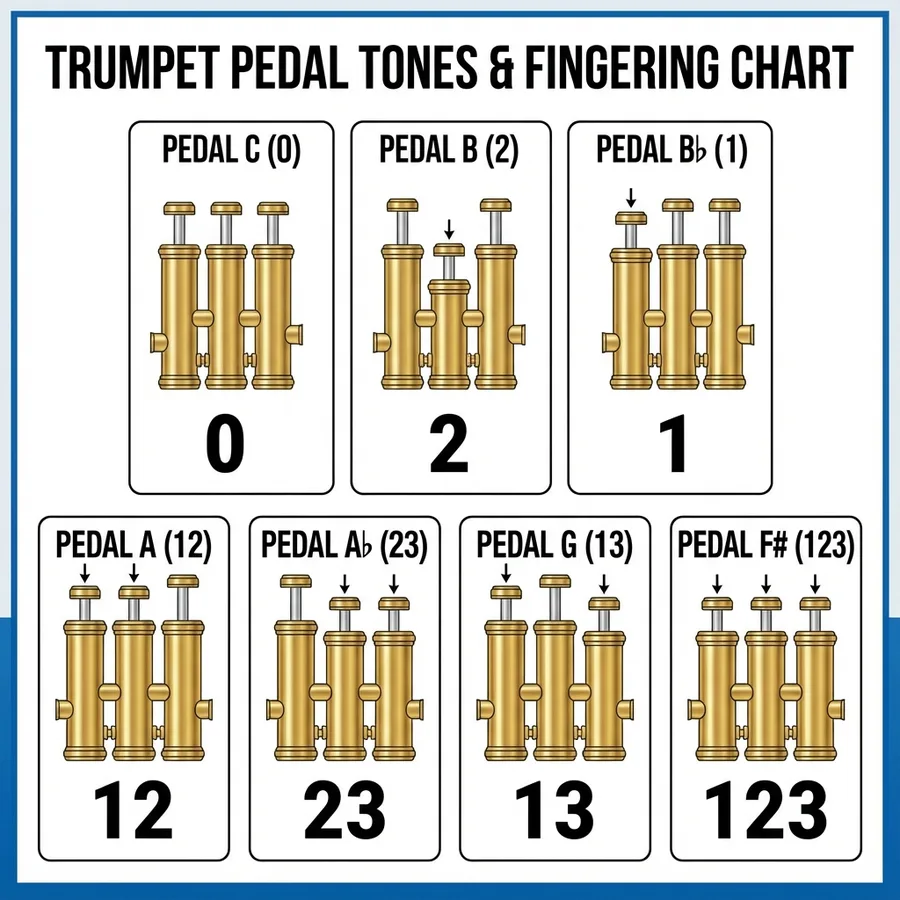
Pedal C is open. Pedal B is 2. Pedal Bb is 1. The fingering pattern is identical to the octave above, but 'lipping' the pitch down requires a very loose embouchure.
Lip Relaxation
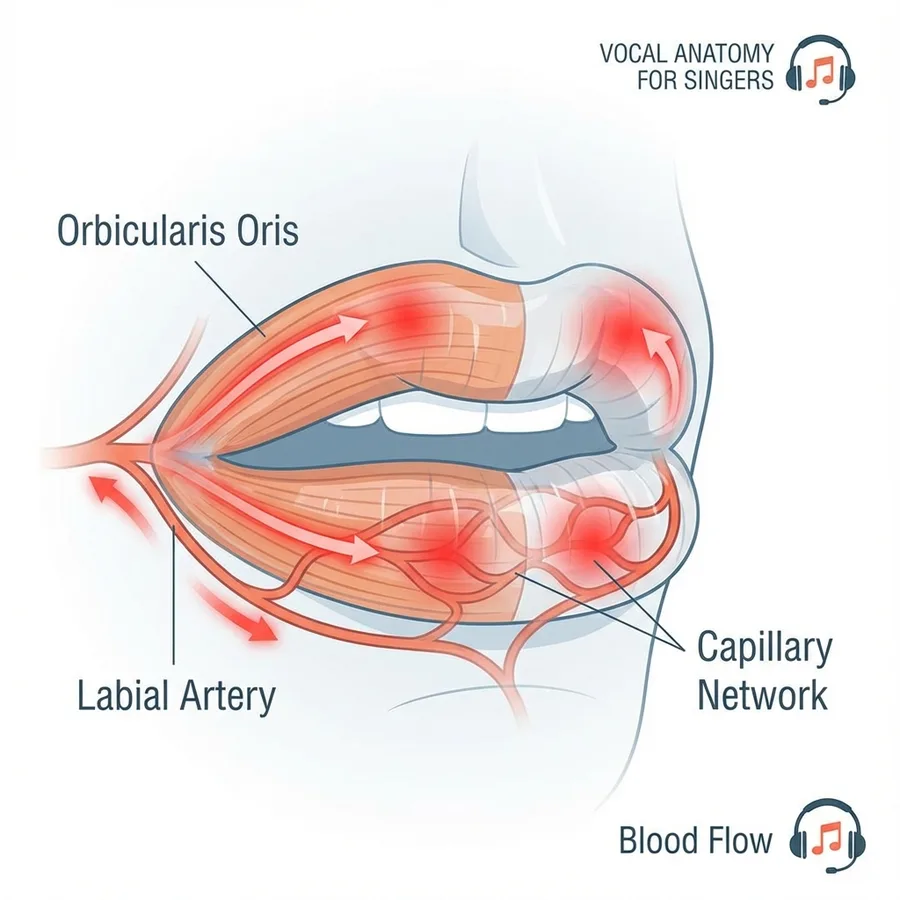
To play a Low C, the aperture vibrates slowly. To play a Pedal C, the entire lip (including the red part) vibrates. It feels like flapping in the wind. The sound should be thick and resonant.
Double Pedal C
The Holy Grail of low notes. It sounds like a refined motorboat. Achieving this resonance opens up your sound in all registers by maximizing blood flow to the tissue.