Module 1: The First Sound
Step 1: The Physiology of Buzz
Welcome! Your journey begins not with the trumpet, but with your lips. The trumpet is merely an amplifier (a radiator of sound); the source is the vibration of your lips (the oscillator).
The Goal: To create a steady, self-sustained vibration. Just as a violin string vibrates when bowed, your lips must vibrate when air passes through them.

Technique 1: The 'M' Setting
We do not want to smile. Smiling stretches the lip tissue thin, creating a bright but thin sound that lacks endurance.
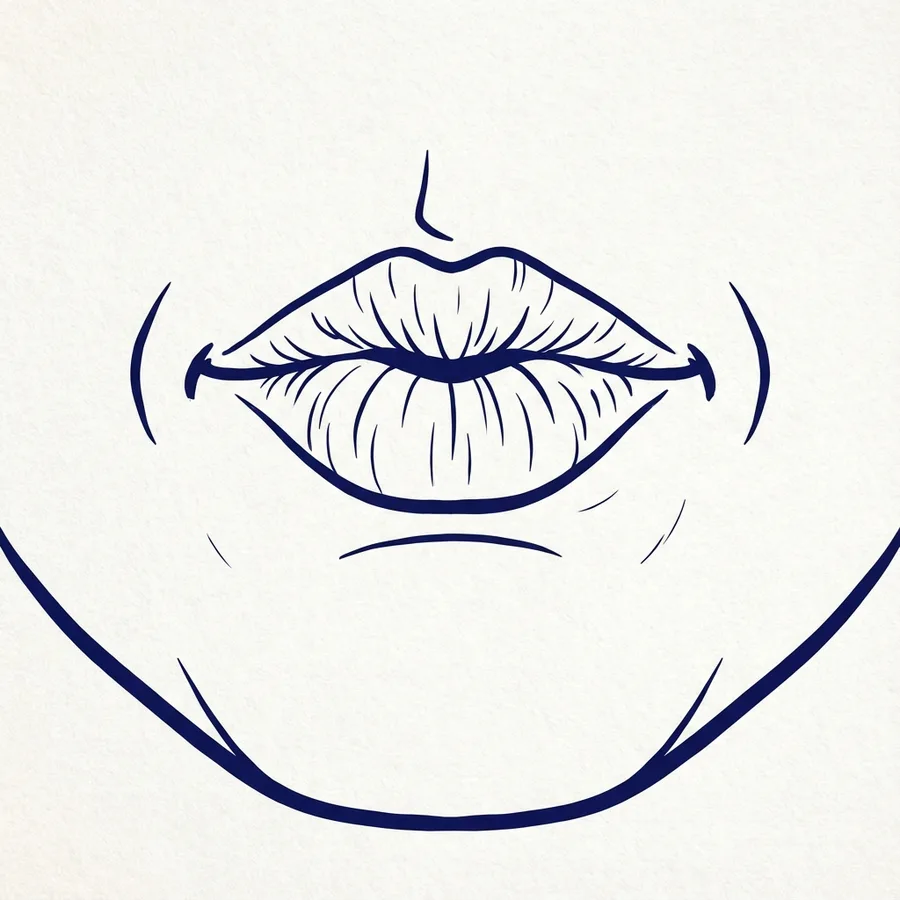
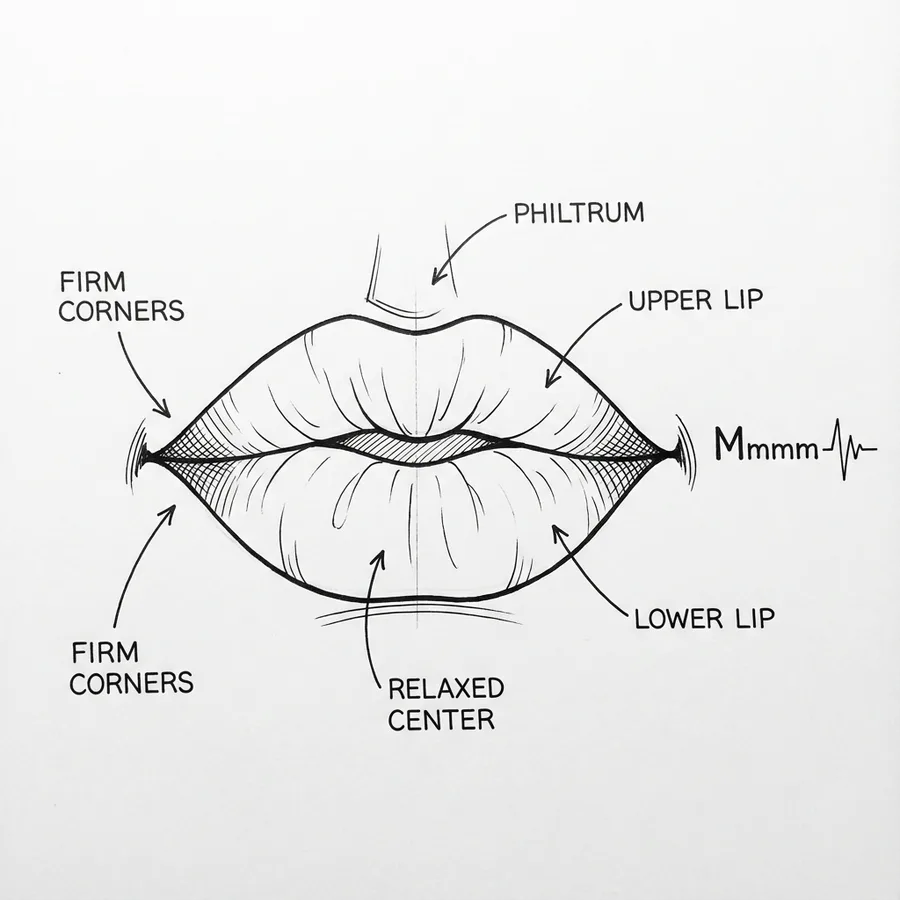
The Setup: Say the letter 'M' (as in 'Mother'). Stop when your lips touch.
- Corners: Firm and pinned against the teeth. They are the anchors.
- Center: Soft and fleshy. This is the vibrating surface.
- Chin: Flat and pointing down. Do not bunch it up.
Technique 2: The Pneumatic Attack
Now, while holding that 'M' shape, we need to release air. Do not blow at your lips; blow through them.
The Action: Place the tip of your tongue behind your top teeth. Build up air pressure behind it. Rapidly pull the tongue back and say 'Too'.
Your lips should burst open slightly and then immediately re-close to vibrate. Bzzzzzz! It should feel like spitting a grain of rice.
Visualizing the Aperture
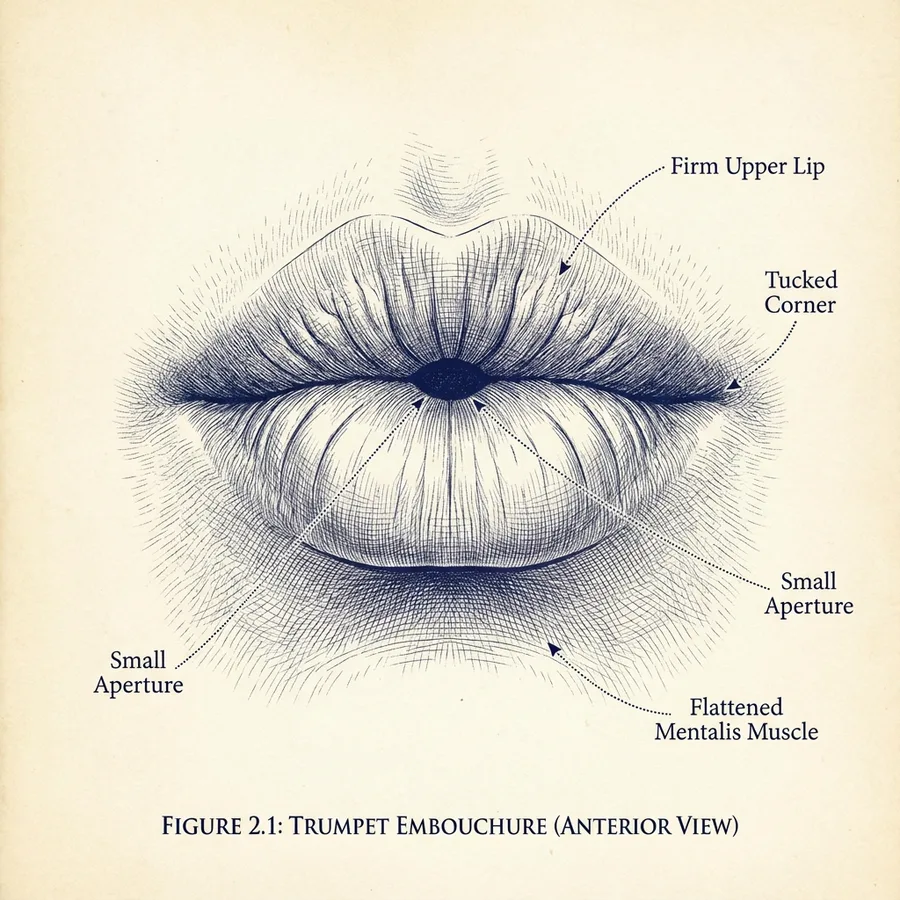
The opening between your lips is called the Aperture. It should be an oval shape, not a flat line.
Analogy: Think of your lips like the double reed of an oboe — the aperture is the gap between them. The lips need to be substantial enough to resist the air stream. If they are too loose, the air rushes through with no sound (wind noise). If they are too tight, the air is blocked (constipation).
Common Pitfalls
- The Smile: Avoid pulling corners back towards ears. Keep them forward.
- The Puffer fish: Do not let cheeks puff out. Use cheek muscles (buccinator) to hold them in against teeth. Puffed cheeks divert air pressure away from the lips.
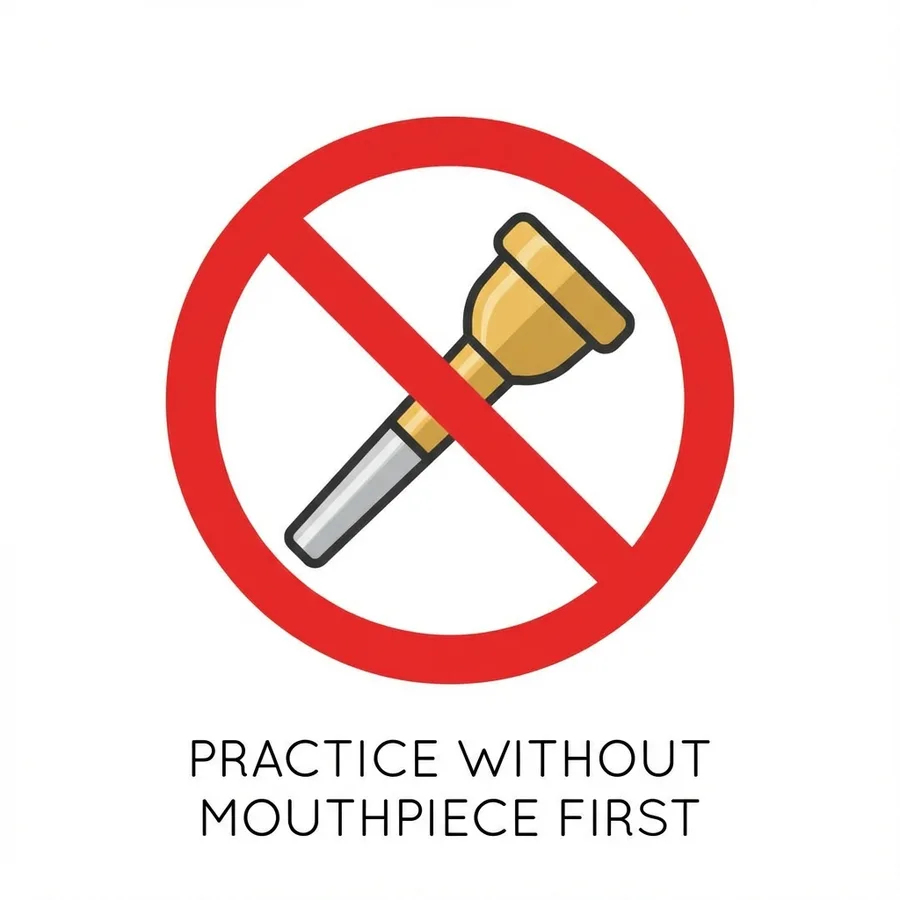
- The Pucker: Don't kiss the mouthpiece. It's a balance between a pucker and a smile.